
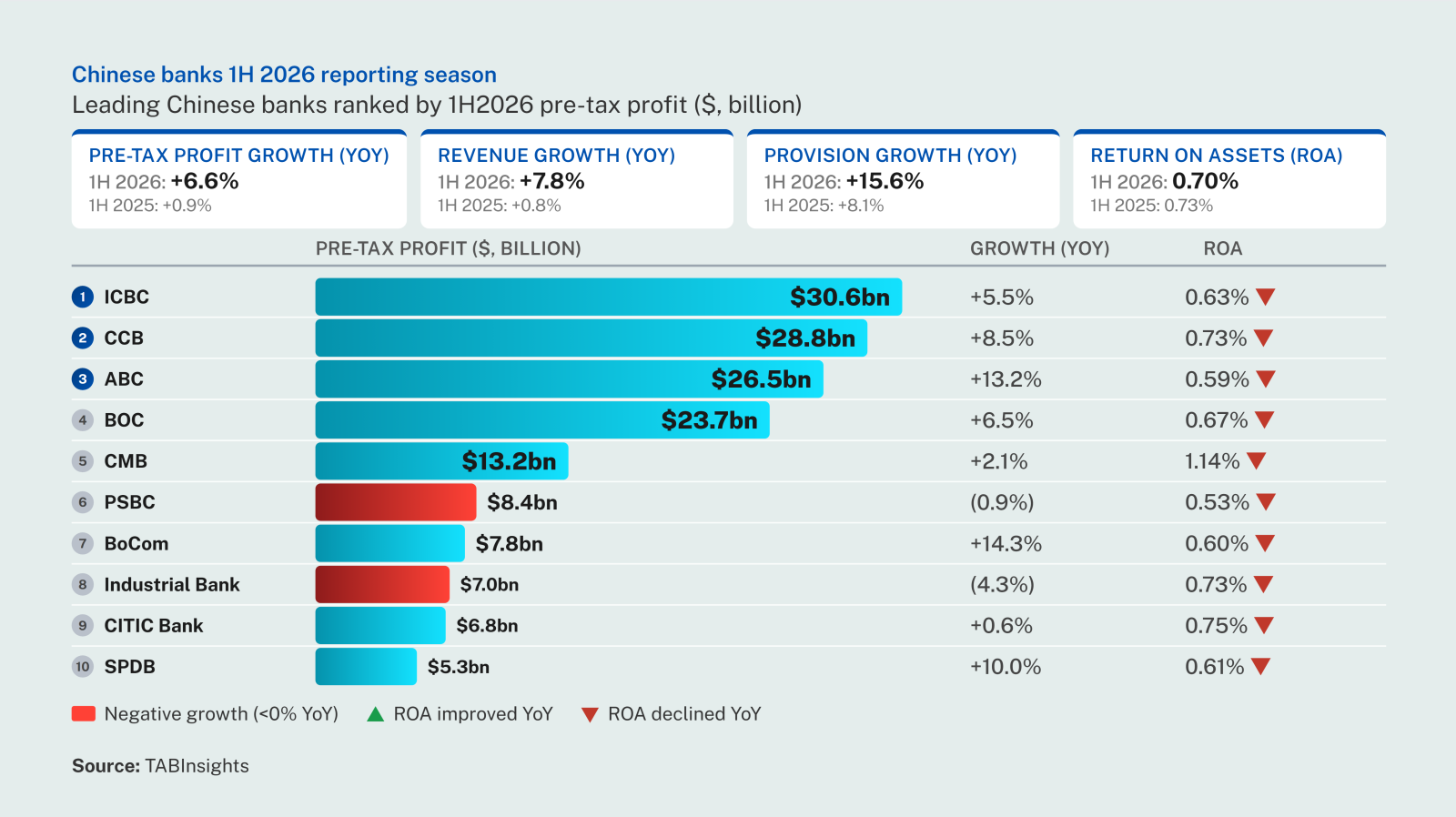
Leading Chinese banks delivered stronger earnings growth in the first half of 2026 (1H2026), but weaker loan demand, rising credit costs and continued pressure on asset yields kept returns under pressure.
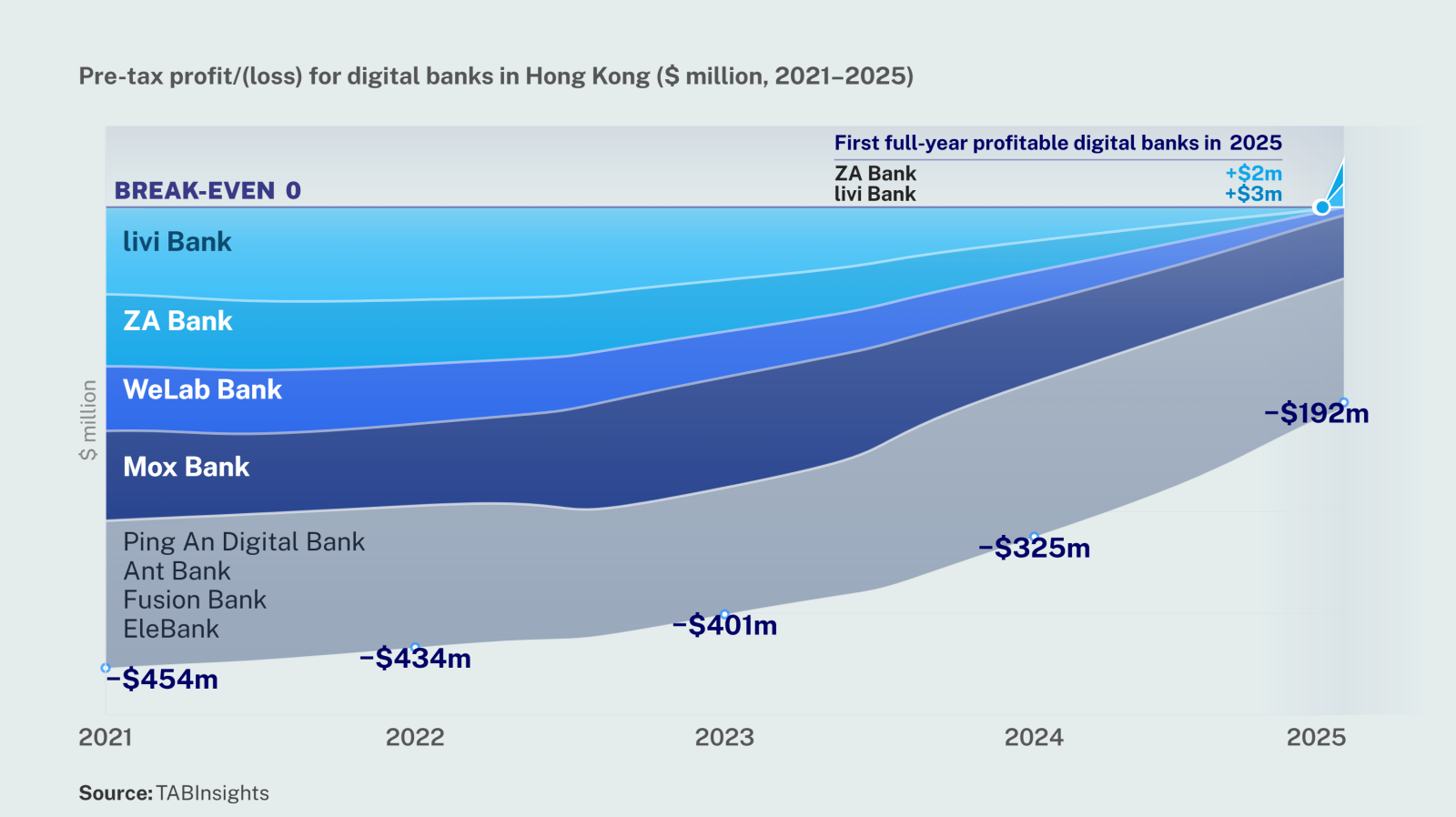
Aggregate losses across Hong Kong's digital banks narrowed sharply, while two leading players, ZA Bank and livi Bank, moved into profitability, supported by an improving revenue mix and tighter cost control, signalling growing progress towards break-even across the sector after more than six years in the market.

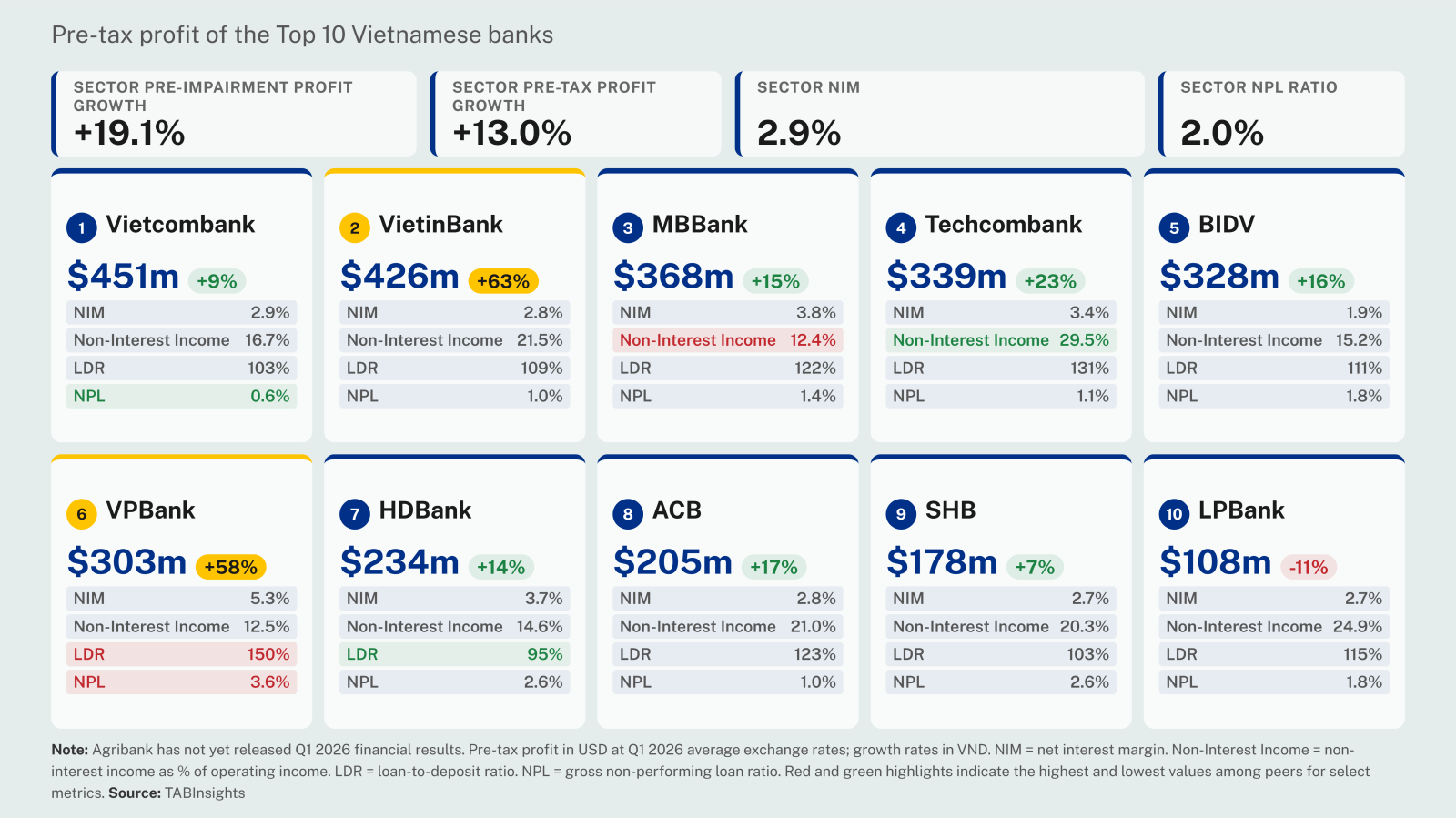
Vietnam's banking sector performance strengthened sharply in the first quarter of 2026, but funding pressures and higher provisions weighed on profit growth. Vietcombank led in absolute profit, while VietinBank and VPBank recorded strong year-on-year gains.
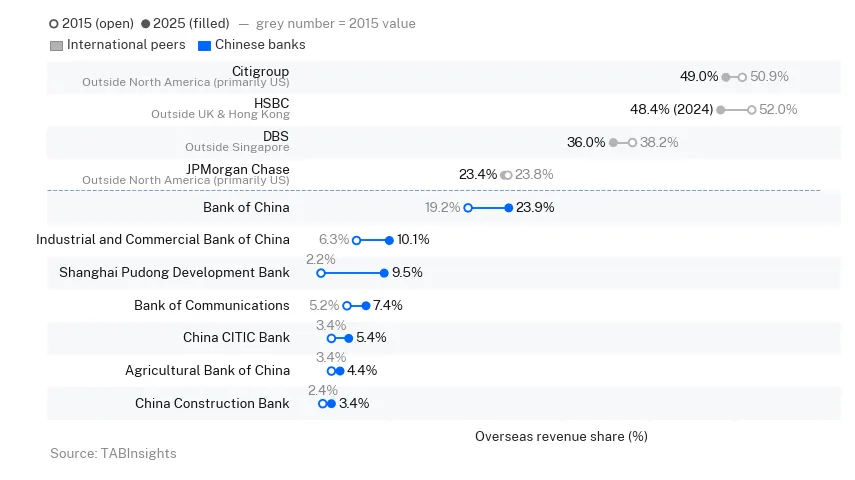
China's major banks are expanding overseas revenue, driven by outbound corporates, renminbi internationalisation and domestic margin pressure. Most earnings, however, remain concentrated in Greater China, highlighting a persistent gap with global peers.
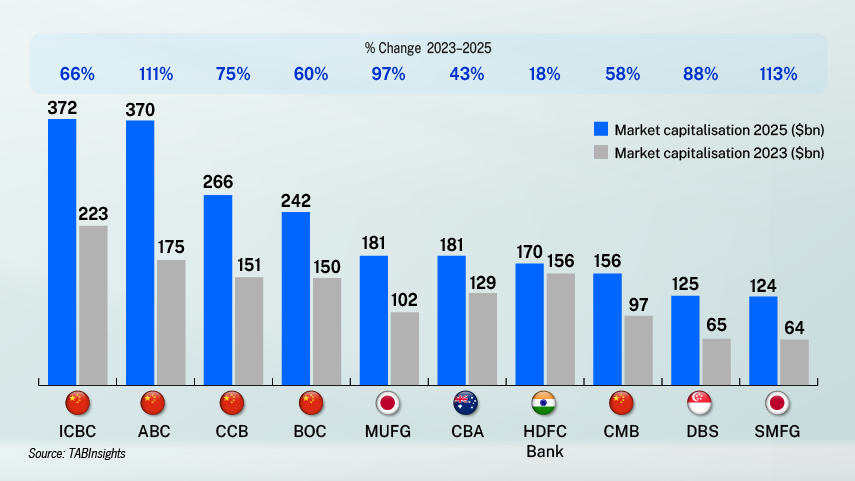
Japanese banks record the strongest gains in the market capitalisation ranking, Chinese megabanks retain scale leadership, while Indian and Indonesian lenders lose ground, and Singapore enters the top tier.
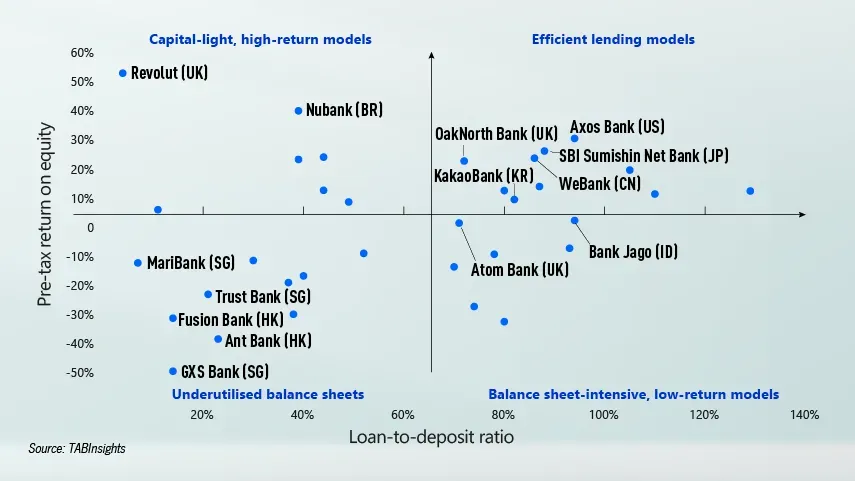
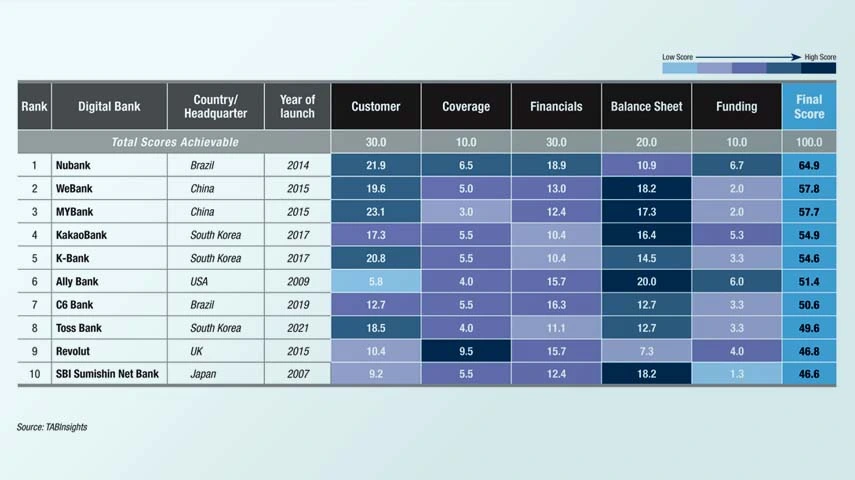
Top digital banks achieve profitability either through disciplined lending execution or by monetising customer ecosystems, not simply by scaling loan growth.
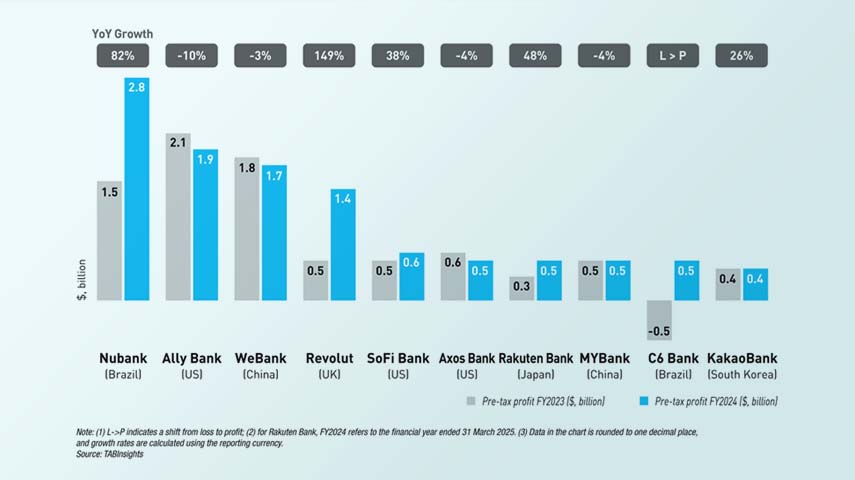
The top 10 digital banks by pre-tax profit leveraged scale advantages, yet growth varied widely, reflecting differences in strategies, market dynamics and operational priorities.
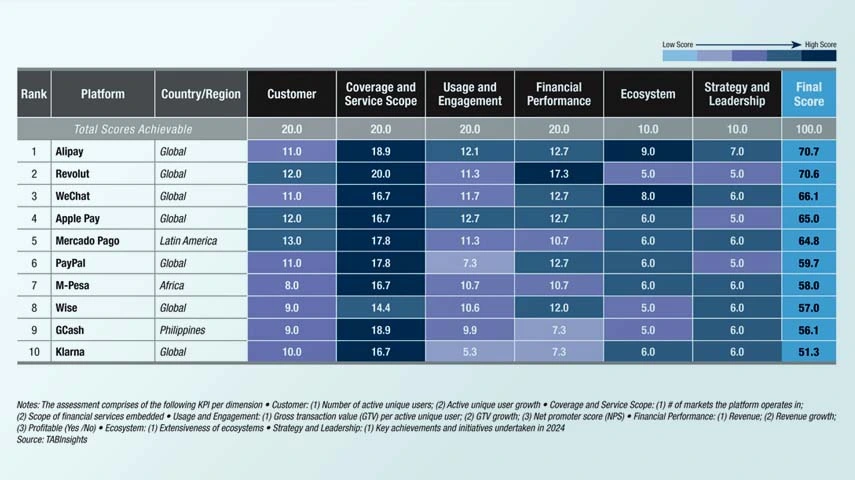
Alipay leads the 2026 TABInsights World’s Best Financial Platforms Ranking with scale and ecosystem depth, while Revolut shows expansion through customer and multi-service growth. Ecosystem integration, artificial intelligence, local adaptation and regulatory compliance underpin growth and competitive advantage.
Digital banks are moving toward more structured growth, with headline growth moderating but overall expansion remaining strong. Profitability has improved, while balance-sheet management, revenue diversification and operational efficiency have become defining priorities.
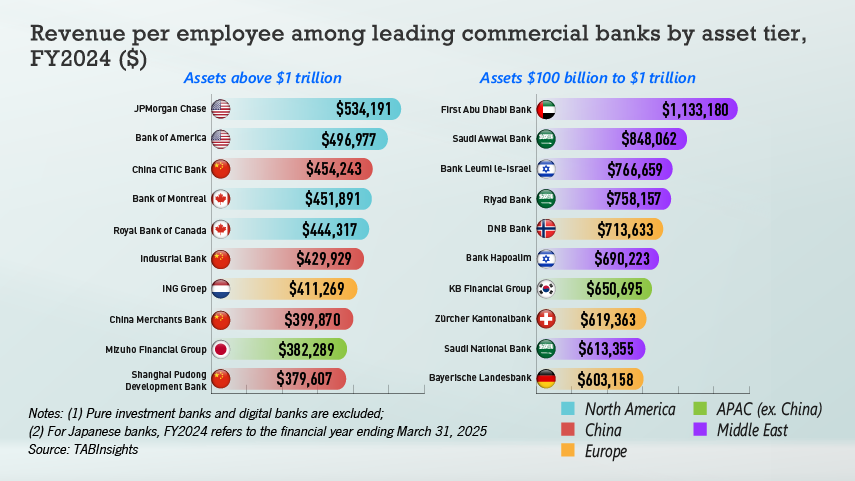
JPMorgan Chase and Bank of America lead large-bank revenue per employee rankings, while mid-tier banks such as First Abu Dhabi Bank and Saudi Awwal Bank report higher overall productivity levels, supported by focused business models, digital adoption and cost discipline.
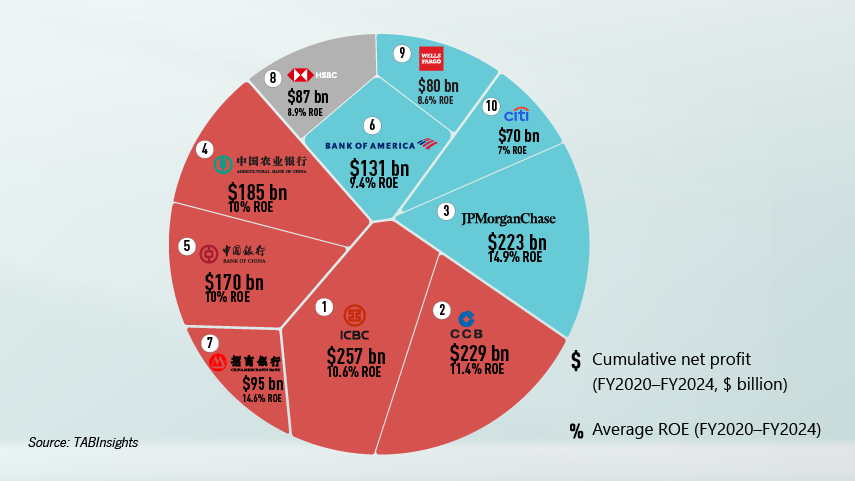
Chinese and US megabanks generate the largest absolute profits through scale and diversification, while emerging-market banks deliver higher — but more volatile — returns on equity.
The TABInsights Islamic Banks Rankings highlight stronger financials in Middle Eastern banks, particularly in Saudi Arabia, Kuwait and the UAE, while Asian institutions remain smaller and less profitable. Islamic banks are strengthening balance sheets amid evolving risk and governance priorities.